

In the financial sector, digitization is advancing. What opportunities arise in digital transformation when parts of accounting are outsourced? Sabine Okon reports from practice.
The digitization of processes in companies is gaining momentum. Many workflows are also undergoing fundamental changes in finance departments. But how does the digital transformation take shape when outsourcing is used in accounting? Certain tasks or even the entire accounting can be outsourced. Process changes then of course also influence the cooperation with the outsourcing partner. Sabine Okon describes her practical experiences in an interview:
How do you perceive the degree of digitization among ICS adminservice’s customers?
Sabine Okon: This varies greatly from customer to customer. For example, the following questions arise: Which processes are involved? How can the customer motivate his employees and convince them to change their processes? How much home office is possible for our customers? These points have a significant impact on the degree of digitization.
Customers have already initiated a lot of digitalization. The Corona pandemic has decisively driven this development. Even with Corona, our customers’ mail simply remained in the unoccupied offices. Everything came to a standstill. What arrived at our premises every day before Corona was now sent to us irregularly. Since we are dependent on the approval processes of our customers, everything came to a standstill again. The processes became inflexible. In cooperation, the accounting processes were converted to digital processing and paperless filing in a very short time. In this way, we were able to quickly give our customers back their flexibility.
And of course, customers would like to take advantage of the cost-saving effects resulting from the digitization of accounting processes. The willingness to digitize is therefore generally very high.
Which processes do your customers want to digitize as a priority?
Sabine Okon: There are simple processes that were digitized at a very early stage, even before the pandemic. This includes, for example, the conversion of account statements to electronic statements. When it comes to digitalization, mass processes are currently being prioritized in particular. A good example is the invoice receipt process, because it is very time-consuming and ties up a lot of capacity. Simple processes can be mapped here, because many tasks are repetitive and can therefore be digitized particularly well. We are feeling the change caused by digitization especially in the workflow, because manual activities have been enormously reduced by the changeover.
What role does ICS adminservice play for your customers in the course of digitization?
Sabine Okon: The first question is how much know-how the customer already has. When tasks are outsourced, our clerks end up being the users. They are therefore involved in the processes. The clerks focus on the end product and therefore as experts they are also able to give many practical tips. The experience of the clerks helps the customers in this regard. Thus, we are a professional companion and consultant and, as experts, can also point out further optimization potential in a targeted manner.
Is outsourcing becoming more popular in particular because expert knowledge on digitization can be used here?
Sabine Okon: Absolutely. This is also a quality feature that we at ICS adminservice like to convey to the outside world. We have clerks on board who have been working here for a very long time and can draw on a wealth of experience. Different customers were served – and thus a wide range of insights is available. When it comes to process conversion, ICS can therefore score particularly well with the empirical values that affect us in our daily work.
How long does such a process changeover take?
Sabine Okon: That always depends on where an outsourcing company is involved. Sometimes the customer’s thoughts about digitizing a process have been there for a long time. Depending on the scope, experience has shown that months or even years can pass from the first idea to the final implementation. Time must therefore be planned for the changeover.
Are there crucial sticking points for the success of digital transformation in the financial sector?
Sabine Okon: The decisive factor here is the support of the employees who are responsible for the technical part. And in general, the customer must be willing to change processes at all levels. In addition, the digitization of accounting should be thought of across the board. So a holistic strategy is needed.
We are very interested in process optimization, both for us and our customers. There are exciting technological possibilities, such as the use of RPA (Robotic Process Automation). This is where we use know-how that is available to our customers around the clock and supports our employees in recurring processes, for example in dunning. We bundle our know-how to shed light on the processes for our customers: What would be possible? What can we offer customers? In addition, we also like to convince personally, because despite all digitalization, cooperation at eye level with our customers is close to our hearts.
Sabine Okon: Team Leader Finance and Accounting, Accountant with more than 15 years of practice, at ICS since 2009
The interview was conducted by our guest author Sylvia Meier.
Image Source: Canva Photographer: kanchanachitkhamma; ICS adminservice GmbH
Author
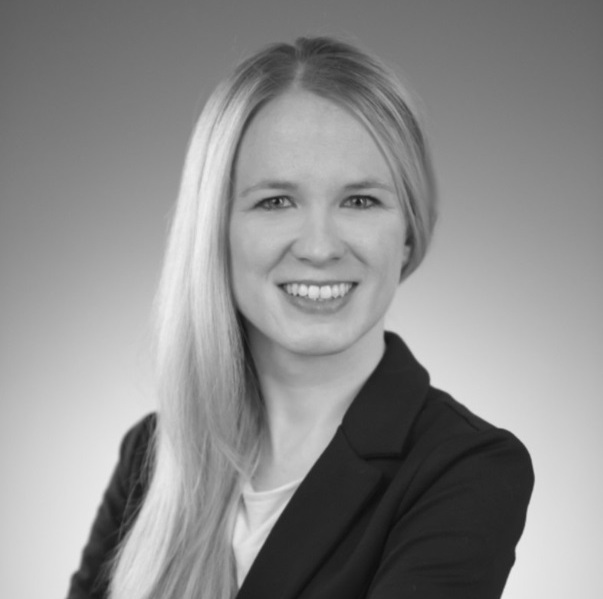
Sylvia Meier
Guest Author
Sylvia Meier is a certified financial economist (FH) and has worked at the tax office, in consulting (Big Four firm), and for a specialized publisher. Today, as a freelance consultant, she supports companies and can demonstrate numerous publications, particularly on the topics of taxes, controlling, accounting, and finance.
[button type=”flat” shape=”square” size=”large” href=”https://www.xing.com/profile/Sylvia_Meier6″ target=”blank” title=”Example”]Contact Us[/button]You might also be interested in these posts

October 27, 2021