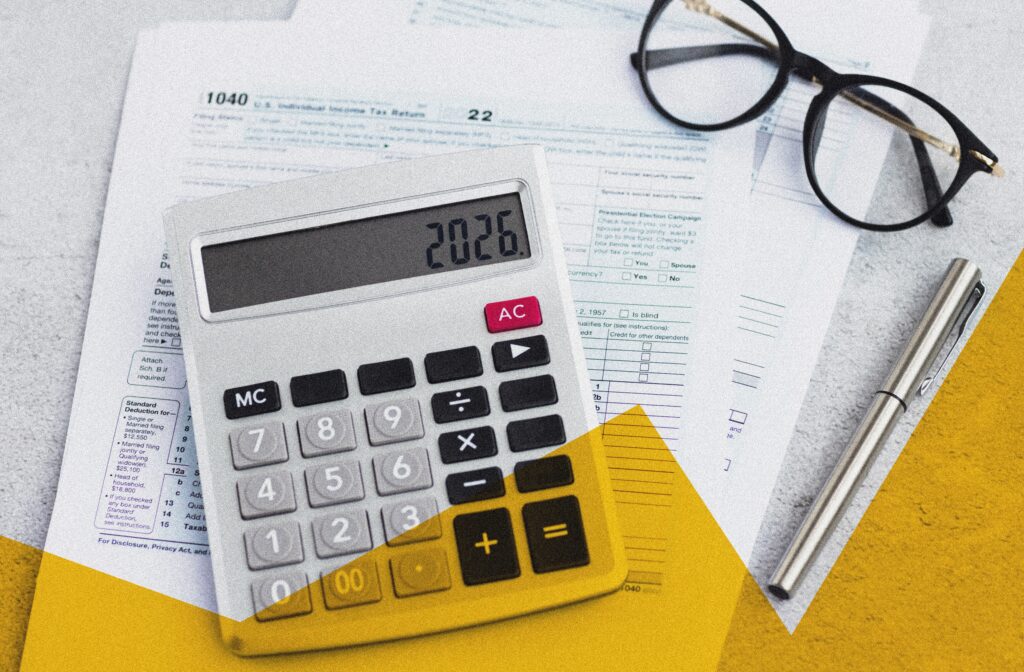



The accounting department must proceed carefully, especially with regard to sales tax and wage tax. Audits by the tax offices regularly result in considerable tax arrears.
All business transactions of a company end up in accounting. And in quite a few cases, the VAT or wage tax assessment is anything but easy. However, the tax office often takes a particularly close look at precisely these cases.
Special audits on income tax and sales tax
Anyone who thinks of an audit by the tax office usually automatically links this with a tax audit. The tax audit is often used as a regular audit service. But there are still special tests that are used if necessary. In particular, these audits may be pending in the case of irregularities in wage tax and VAT. For example, there are the following exams:
- Payroll tax audit
- Wage tax review
- Special VAT audit
- VAT review
If one of these audits is carried out, it is usually because the tax office has found inconsistencies.
Exception: Wage tax audits are often scheduled on a regular basis, similar to a tax audit. And special VAT audits can also be carried out on a newly founded company.
Statistics of the tax administration
These audits often lead to high back tax payments. From the point of view of the tax authorities, this is referred to as an additional result. In 2021 alone, special VAT audits led to an additional result of around 1.31 billion euros. 64,366 special VAT audits were carried out. 1,684 examiners were on duty.
Significant additional results were also achieved in terms of income tax: 70,193 employers were audited in 2021. On average, 1,900 inspectors were on duty. The additional result in 2021 was 729.3 million euros. In addition to the regular tax audits, external auditors also objected to business transactions in sales tax and wage tax, which led to additional payments in the millions. And in the case of income tax, it should be mentioned here that the employer can be held liable.
However, the fact that a special audit is pending at all is usually due to the fact that some abnormality has been detected. Has the accounting department perhaps made a mistake?
Special audits are carried out as required
If, for example, a company declares an exceptionally large amount of input tax in a pre-filing period, this can be a reason for the tax office to schedule a special VAT audit of the company. The accounting department must therefore be aware that if postings are made that deviate from the “norm” with regard to income tax or VAT, this can trigger an audit. The corresponding entries must be able to be fully documented. The accounting department must always be prepared for a possible audit.
Review takes place without notice
The VAT review and the wage tax review, for example, do not have to be announced. The auditor may, without prior notification, show up during the company’s normal business hours and request the submission of records and supporting documents. It is obvious that it does not exactly create trust if no contact person from the accounting department is available and the necessary records are not found quickly.
Note: In addition to the wage tax and sales tax review, there is also the so-called cash audit. Read also: Cash accounting is the focus of the tax offices
How can the accounting department proceed?
When filing income tax and filing VAT in advance, companies use accounting data. Sales tax and wage tax must always be checked particularly carefully by the accounting department. In the event of extraordinary developments (e.g. particularly high input tax amounts), the accounting department must be prepared for possible special audits. If, for example, investments are planned, it can make sense to point out to the management that an audit may be due in the event of high input tax deductions. Could the investments possibly be spread over time?
Companies should have a plan on how to react if an external auditor shows up at the door unannounced:
- Who is the contact person for the tax officer?
- Where is the required data stored?
- Check carefully: What data does the tax officer need (audit period?)? And who can release this data?
- Should a contact person from the tax consultancy be notified?
- What options are there if the inspector has complaints?
Whether special audit or tax audit, with ICS adminservice as an external service partner in accounting, our customers are always well prepared and can face these deadlines with confidence. What experience have you had with special audits? We look forward to your comments.
Image source: Pixabay Photographer: charnsitr
Author
Sylvia Meier
Guest Author
Sylvia Meier is a certified financial economist (FH) and has worked at the tax office, in consulting (Big Four firm), and for a specialized publisher. Today, as a freelance consultant, she supports companies and can demonstrate numerous publications, particularly on the topics of taxes, controlling, accounting, and finance.
[button type=”flat” shape=”square” size=”large” href=”https://www.xing.com/profile/Sylvia_Meier6″ target=”blank” title=”Example”]Contact Us[/button]You might also be interested in these posts

October 12, 2021

July 8, 2021